JPMorgan Chase CIB
Authorization & Data Access System
System Context
JPMorgan Chase clients needed a clearer way to understand who was authorized to act on accounts, what actions those users could take, and how signer information connected across banking relationships. At the time, retrieving or updating that information could take weeks or longer and depended heavily on internal operations teams.
This work focused on creating a more legible authorization system inside JPMorgan Access by connecting client self-service needs with internal operational workflows, entitlement logic, and account-level visibility.
Key Constraints
- Complex signer types and account relationships
- Manual operational dependency for basic visibility
- Need for clear permissions and limits by user
- High stakes in a regulated financial environment
Primary Goals
- Give clients direct visibility into authorized signers
- Clarify signer roles, permissions, and account scope
- Reduce manual servicing burden on operations teams
- Create a foundation for future self-service actions
Approach
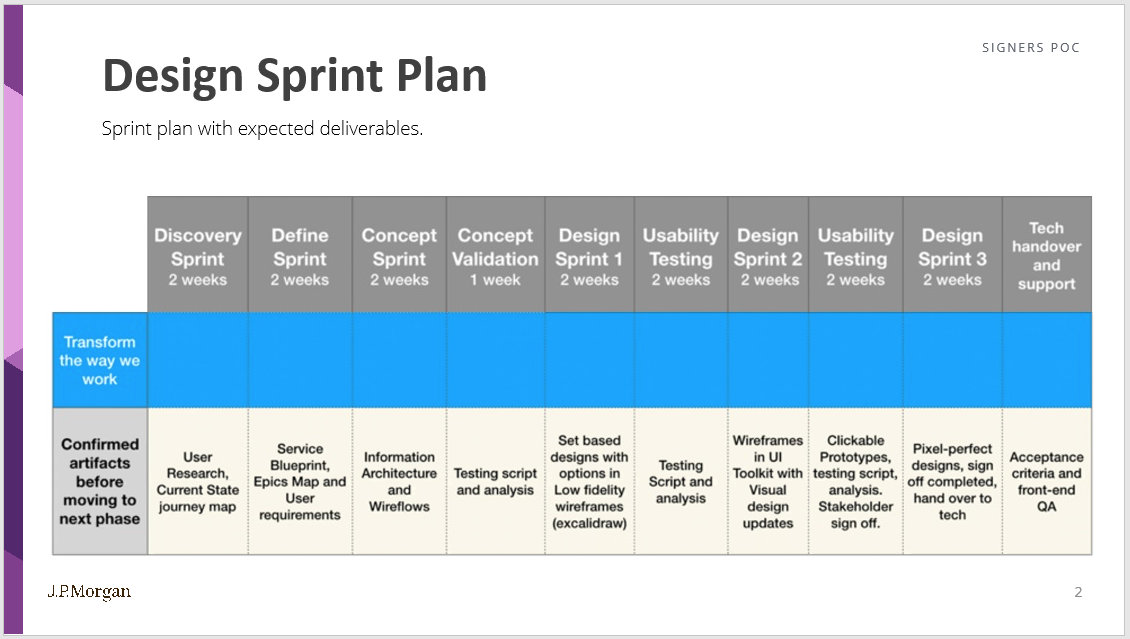
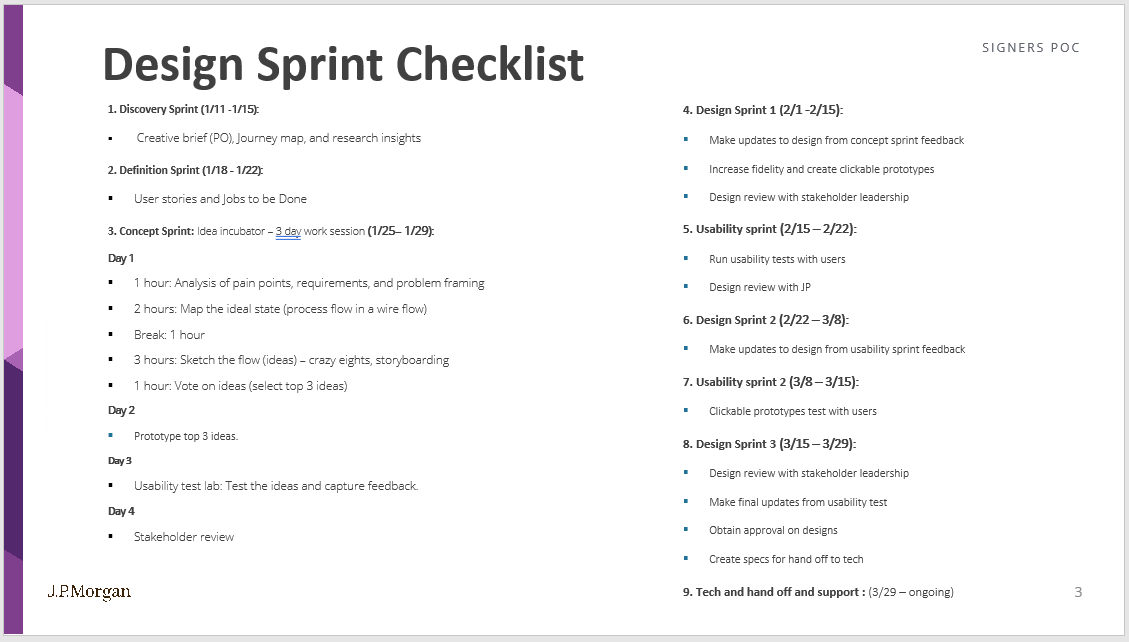
I partnered with product and operations stakeholders to structure the work as a focused system design effort. The process combined discovery, workflow mapping, concept development, interface design, and usability validation with the internal teams closest to the problem.
Because the challenge crossed business, service, and platform concerns, the work required alignment across product, technology, client service, and design. My role was to translate those perspectives into a system that could be understood, tested, and eventually scaled.
Workflow & Data Mapping
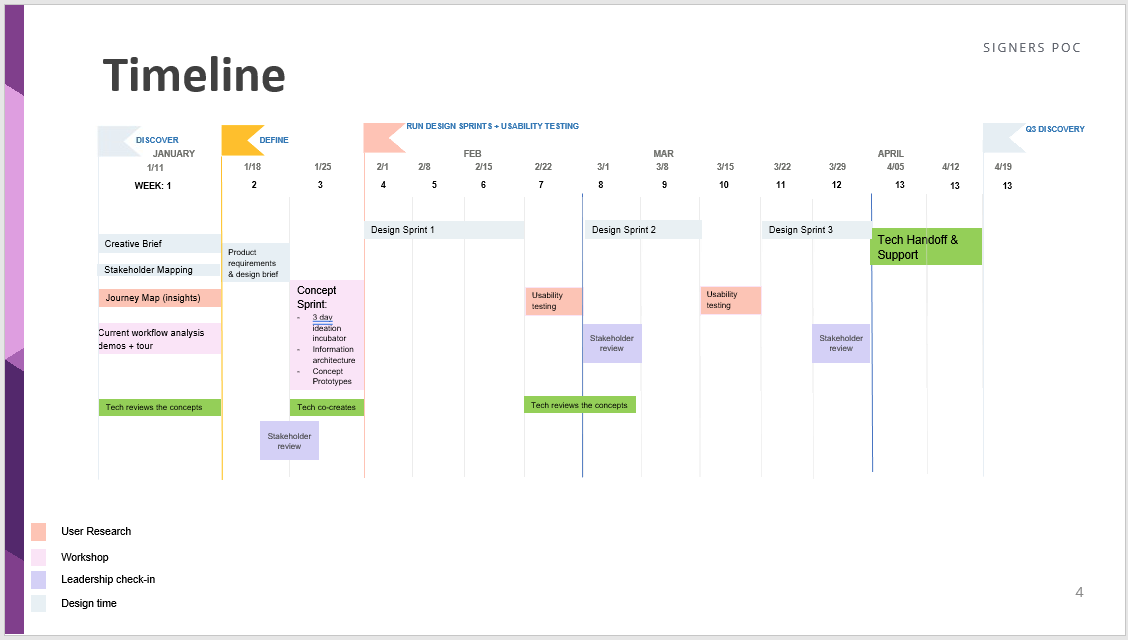
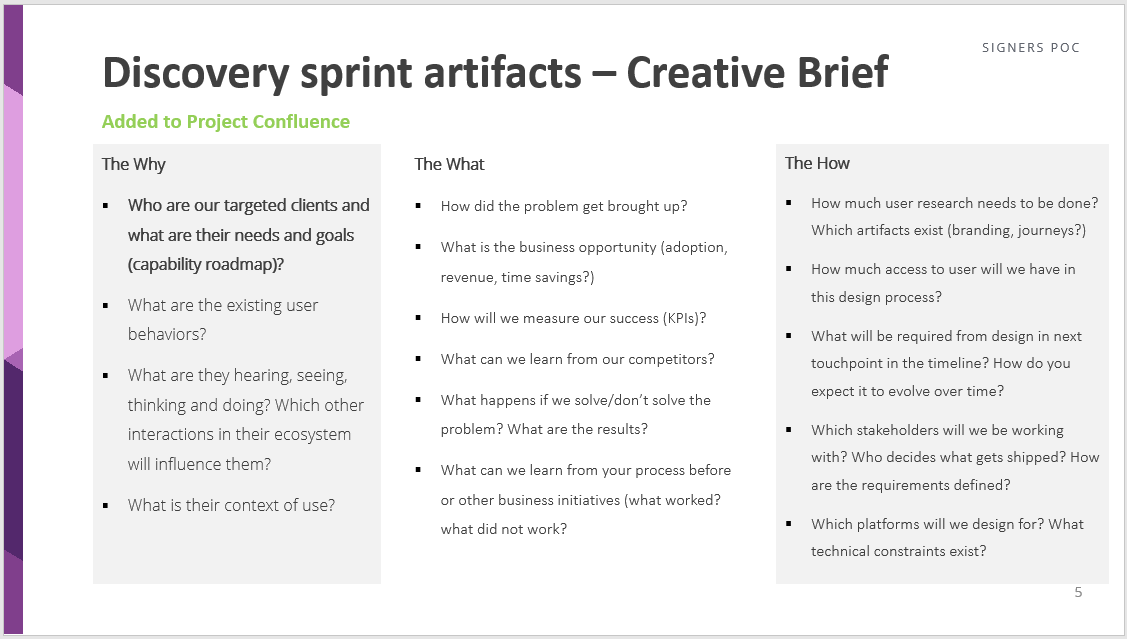
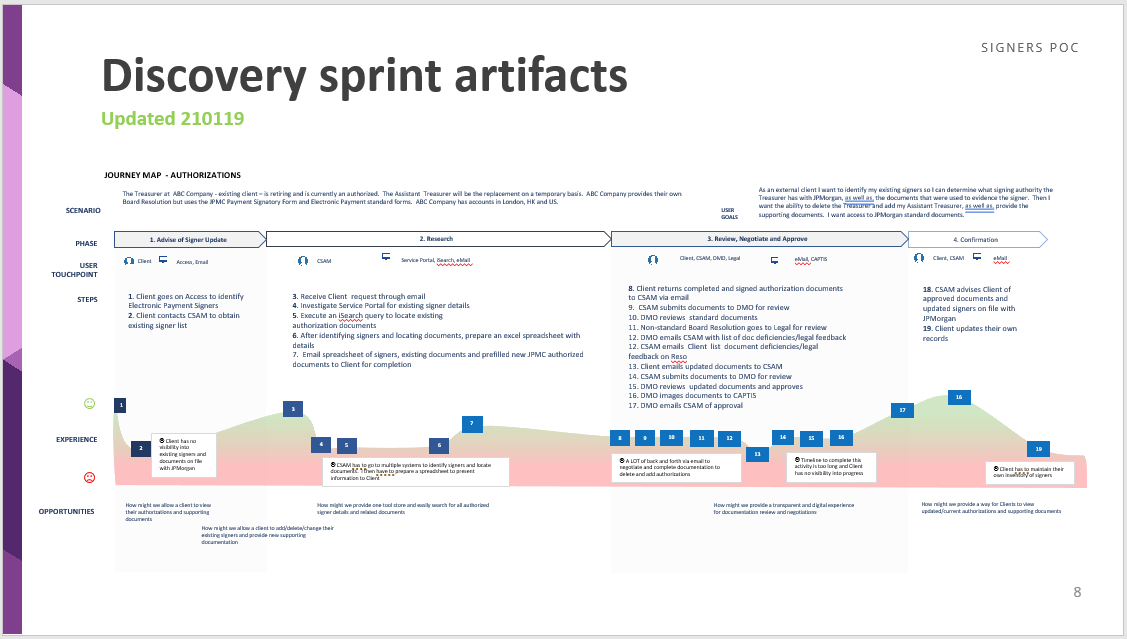
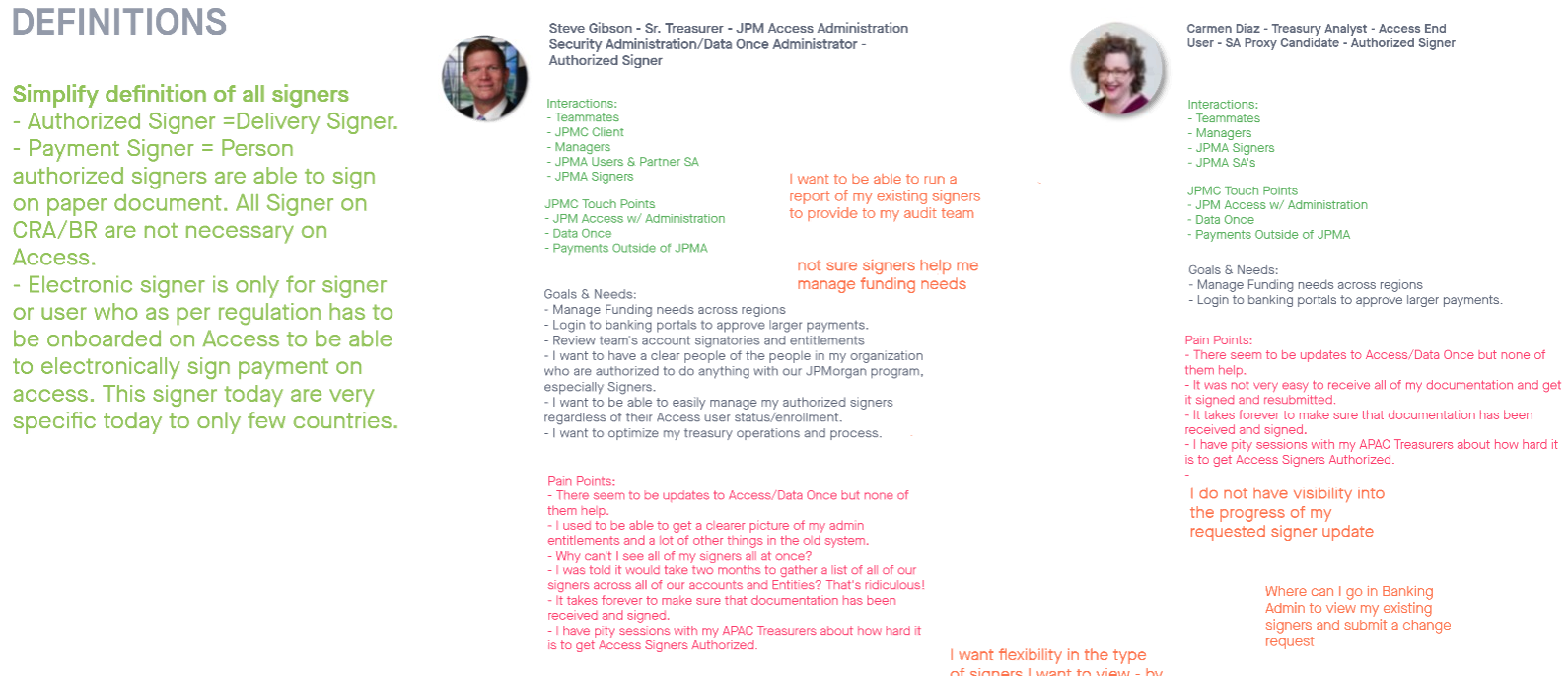
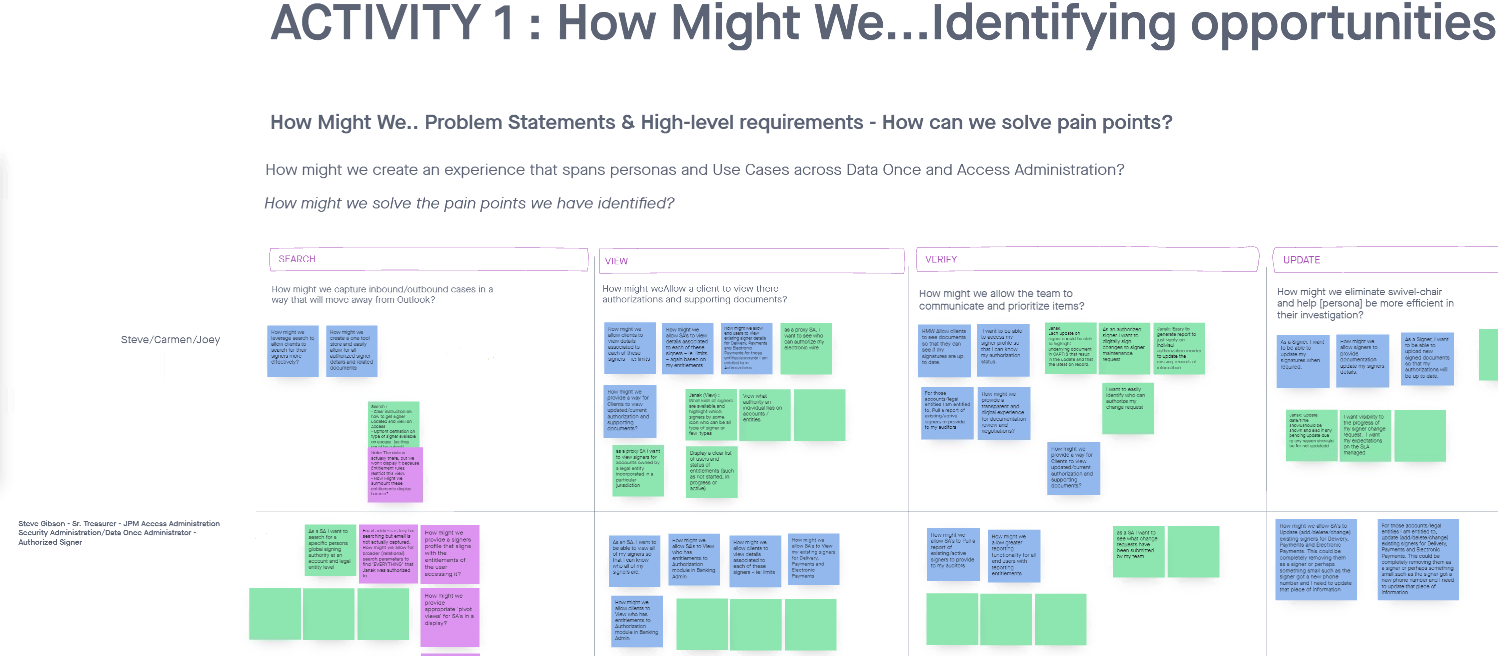
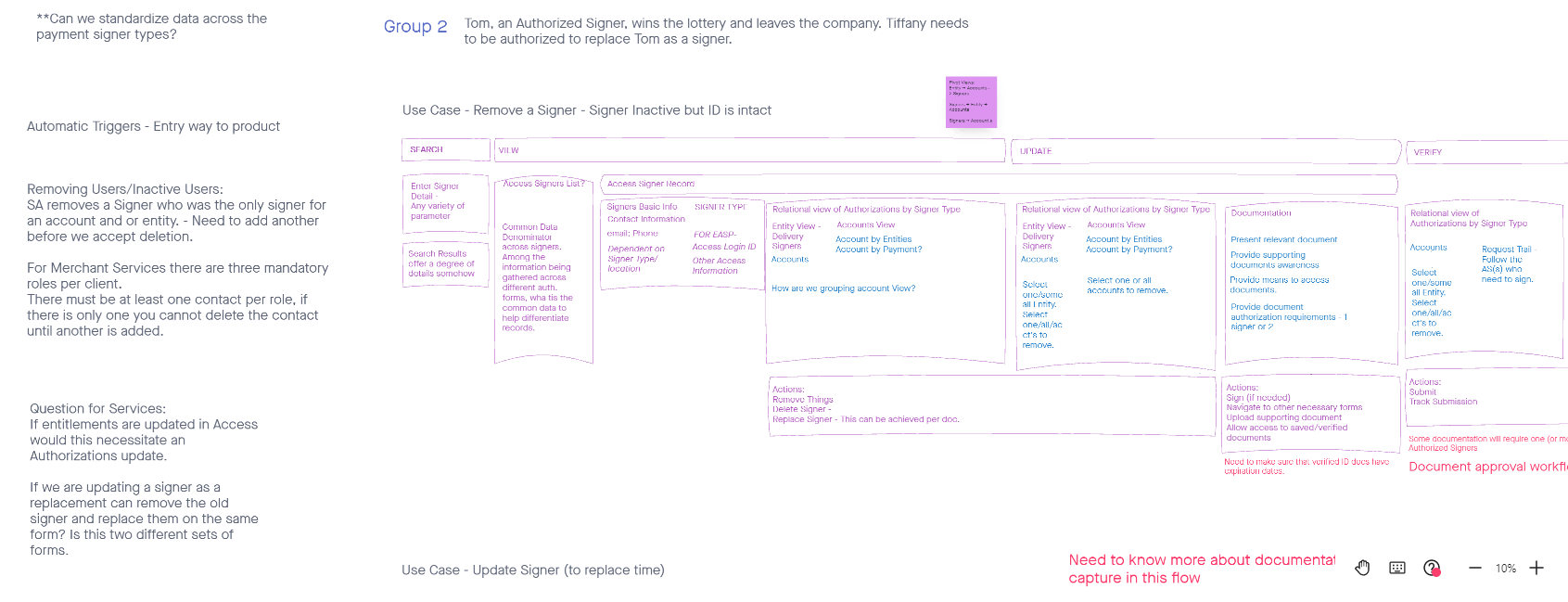
The first step was to understand the current-state workflow: who was involved, which systems were touched, where information lived, and where the process broke down. I used discovery artifacts and journey mapping to make the operational flow visible and to identify where access and signer data needed to be surfaced more clearly.
This work helped move the conversation beyond a simple interface problem. The real issue was a fragmented system of visibility, permissions, and service dependency.
.png)
System Design
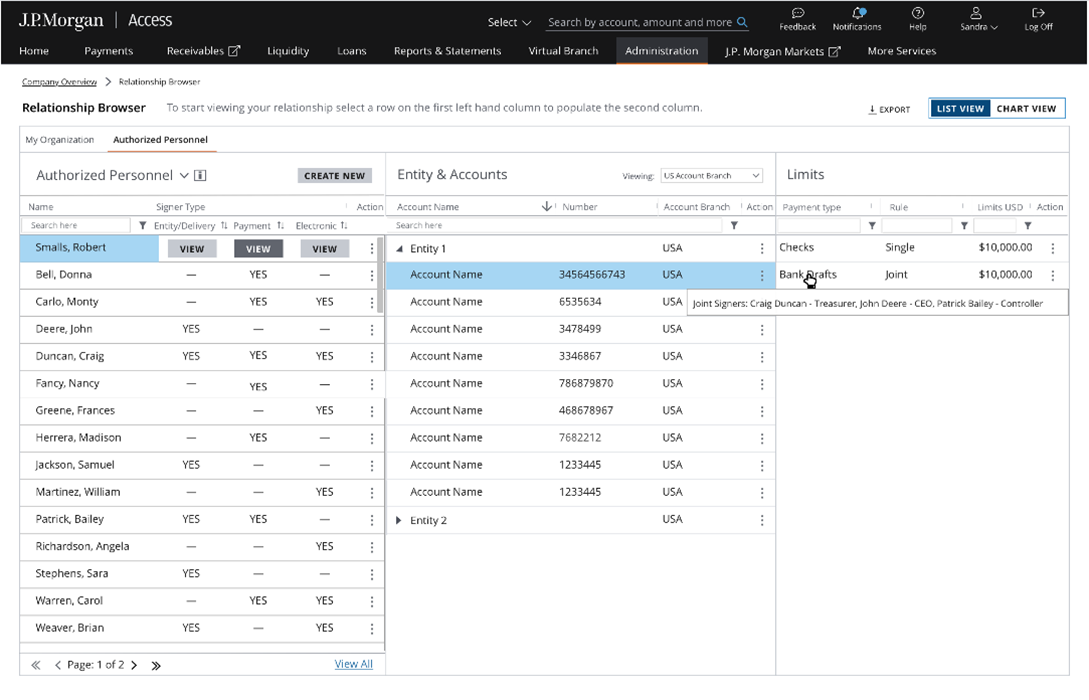
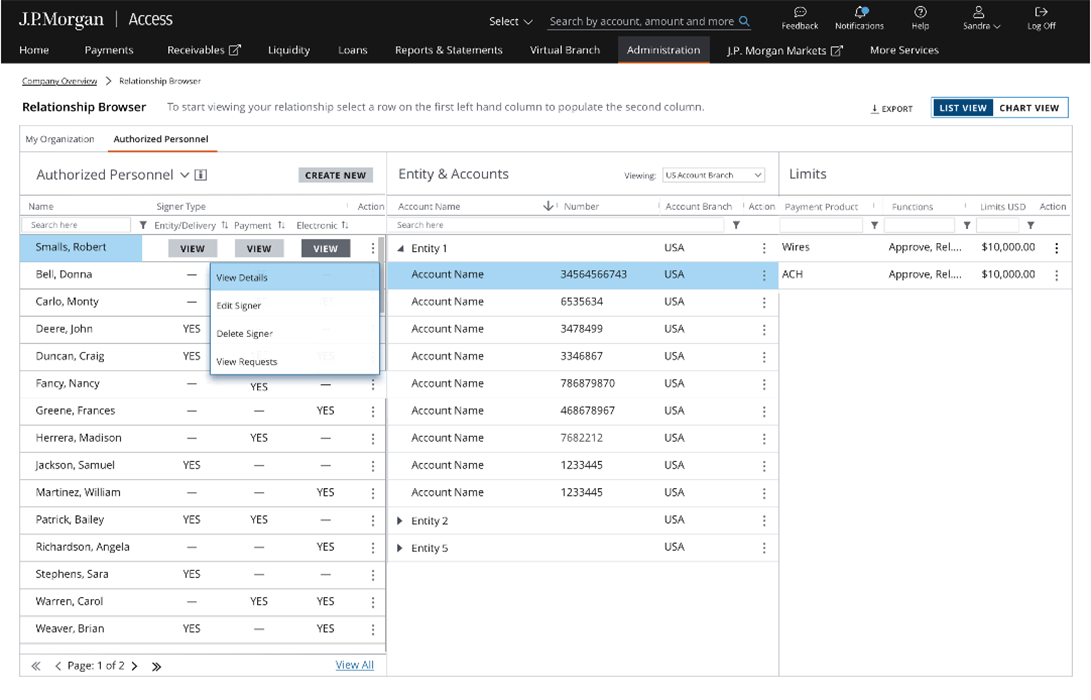
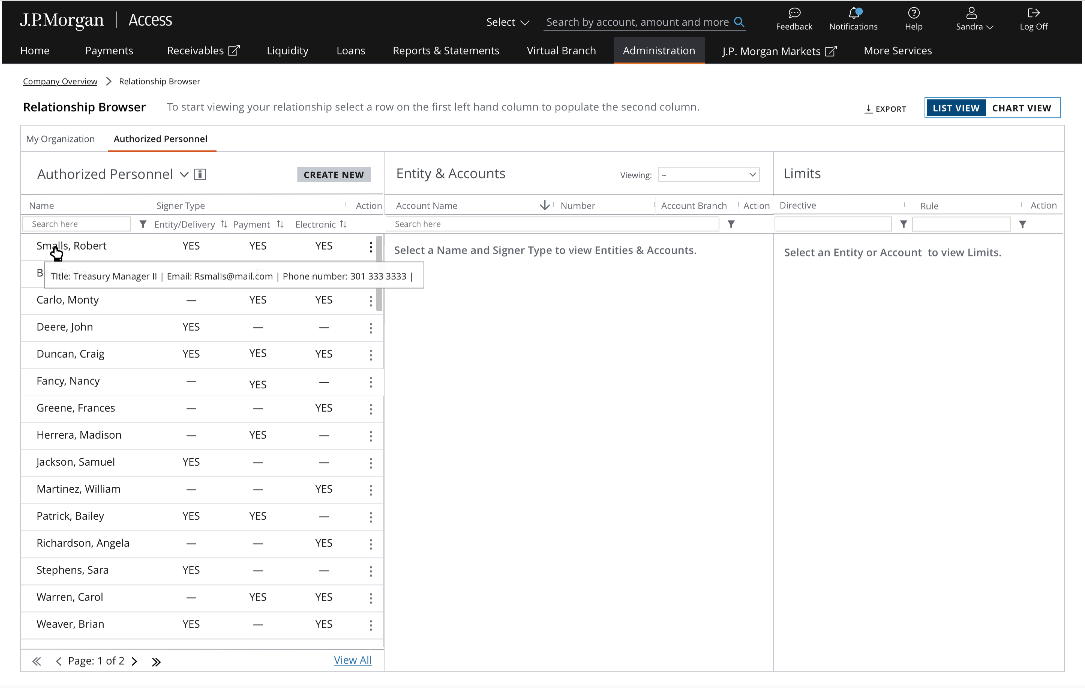
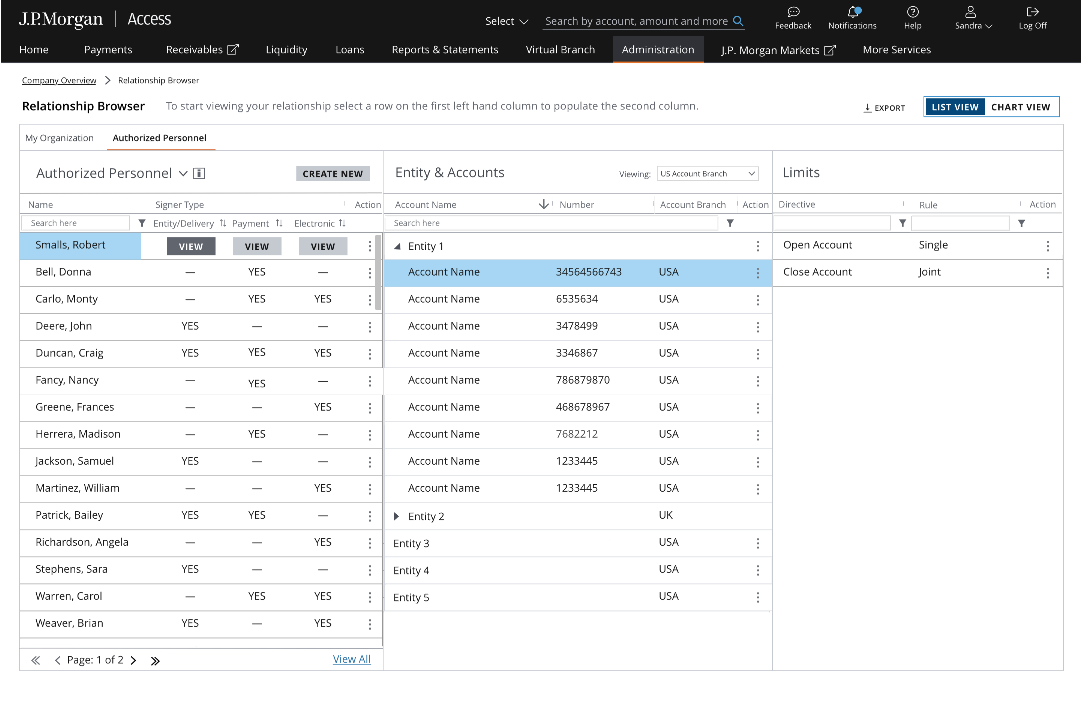
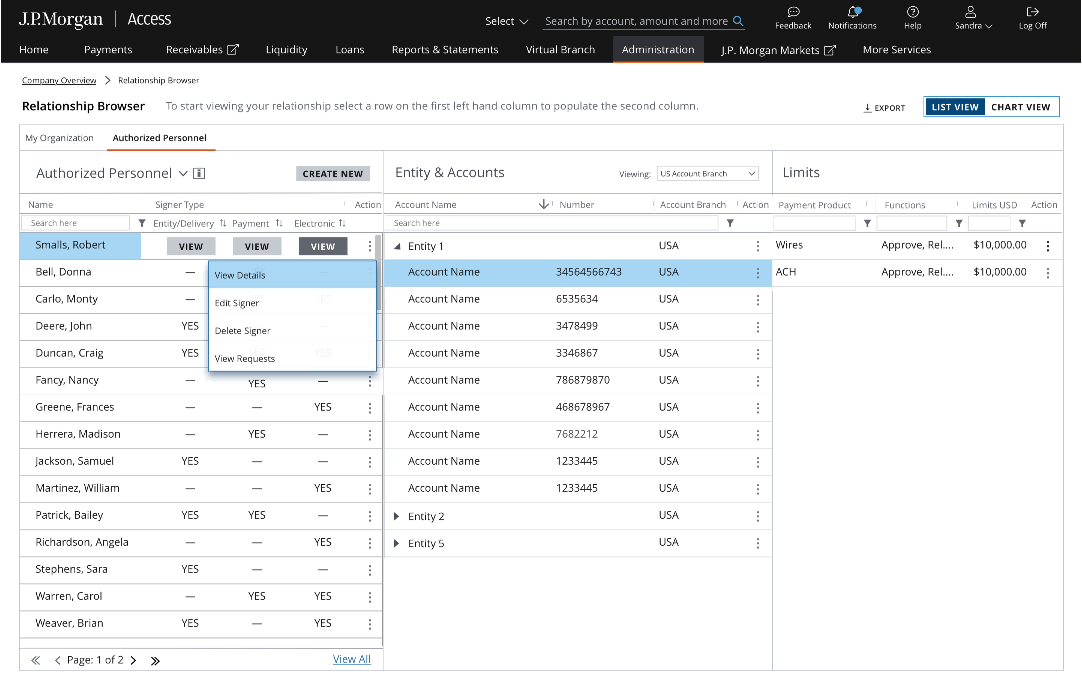
Working with client service representatives and cross-functional partners, I translated business and operational needs into a clearer authorization model. The system needed to show signer types, account relationships, permissions, and limits in a way that supported both clarity and action.
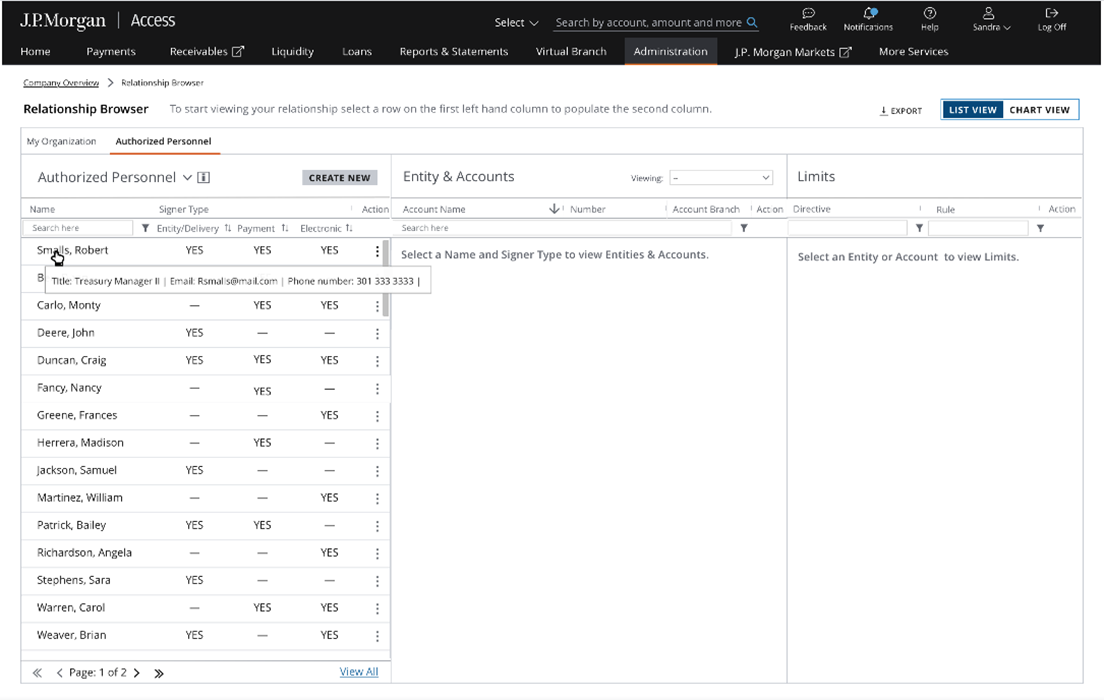
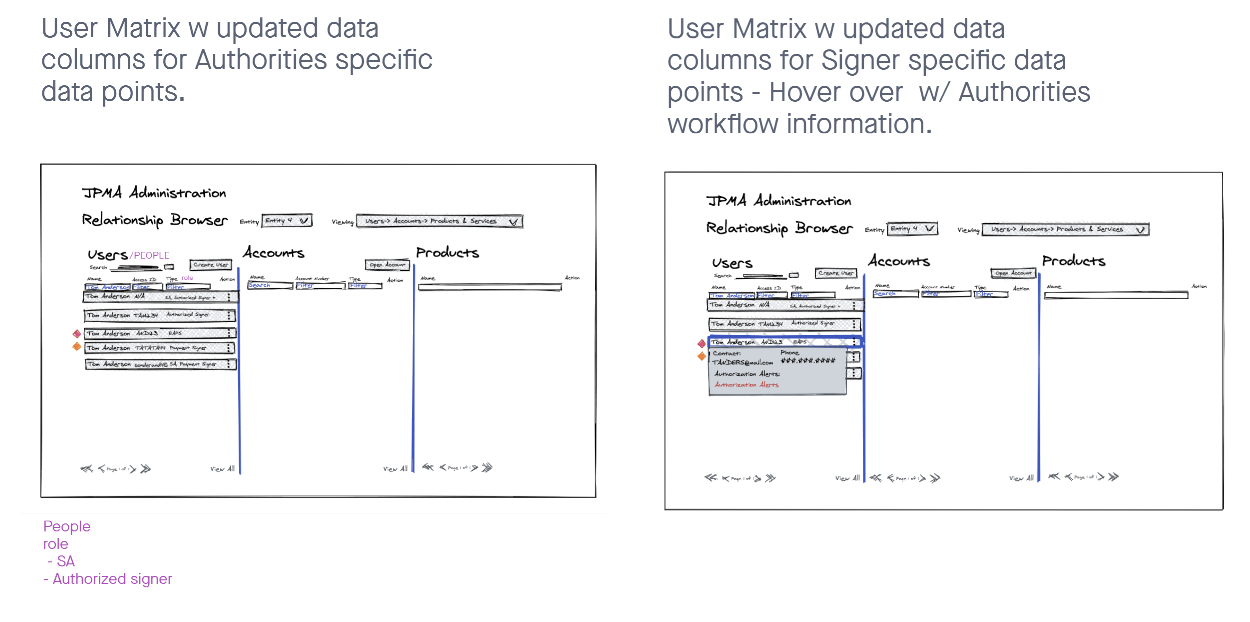
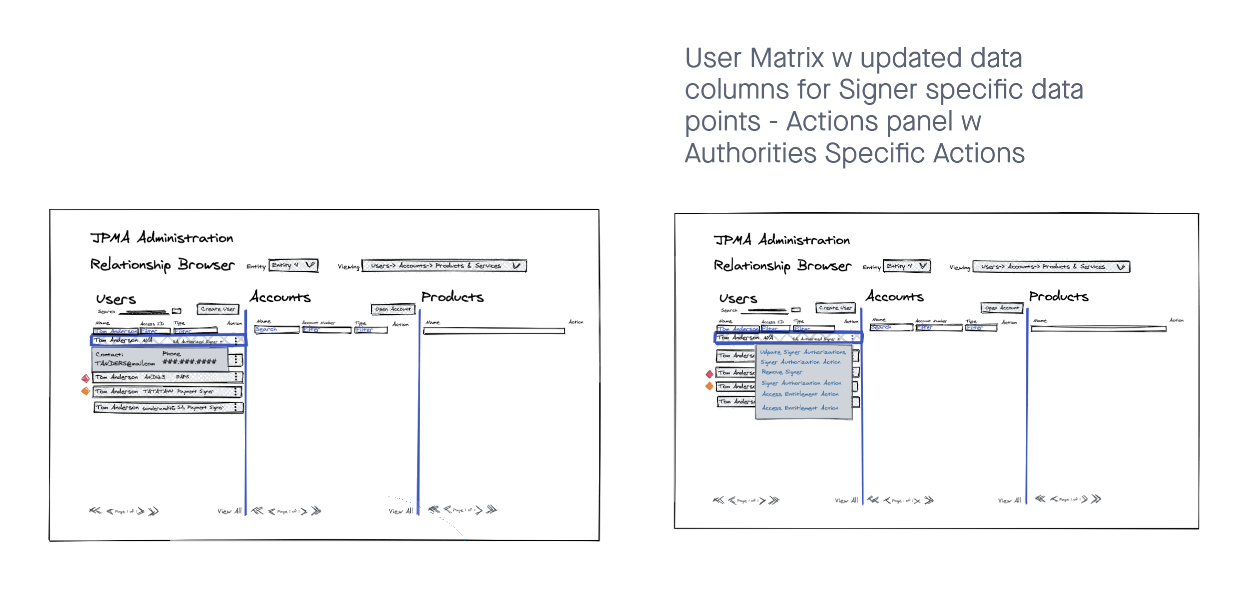
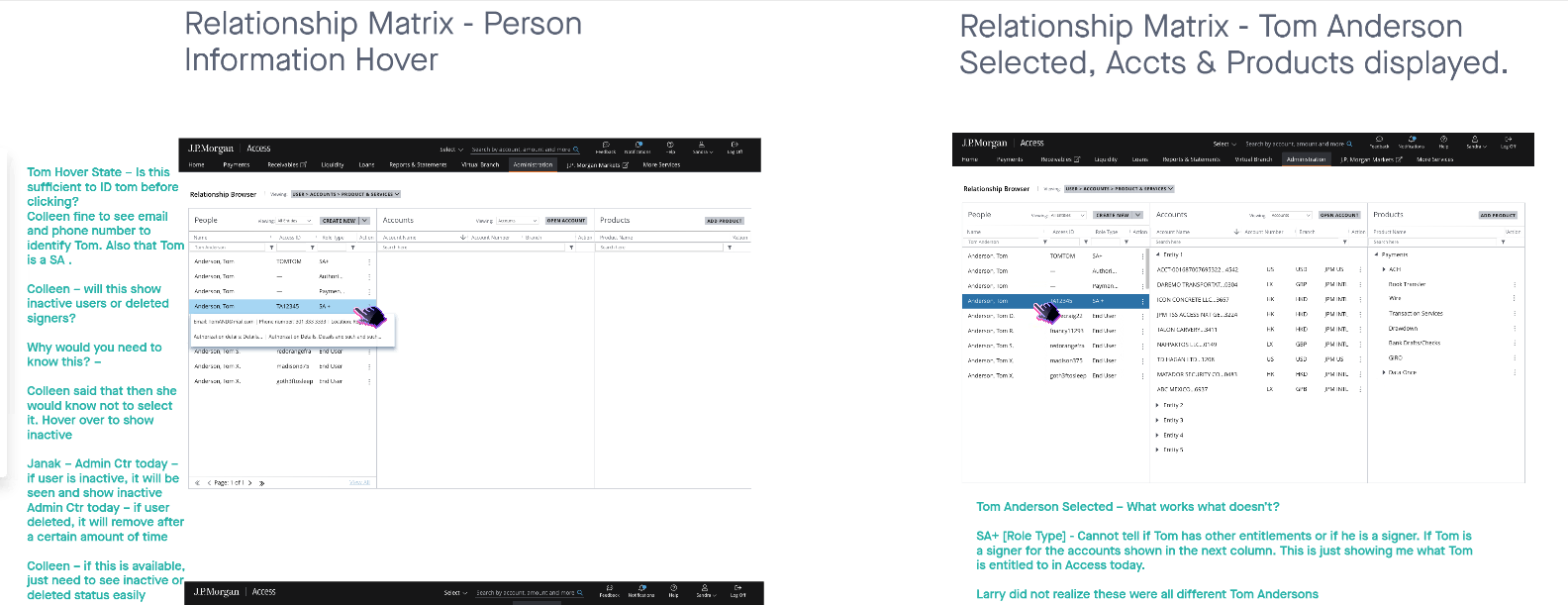
Early concepts tested what information should appear at the user level, what should be visible on hover or in context, and how relationship data between signer, account, and authorization type could be made understandable without overwhelming the user.
Interface as Control Surface
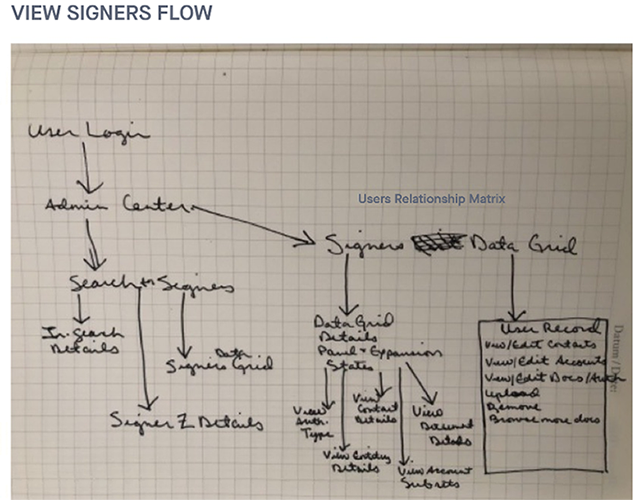
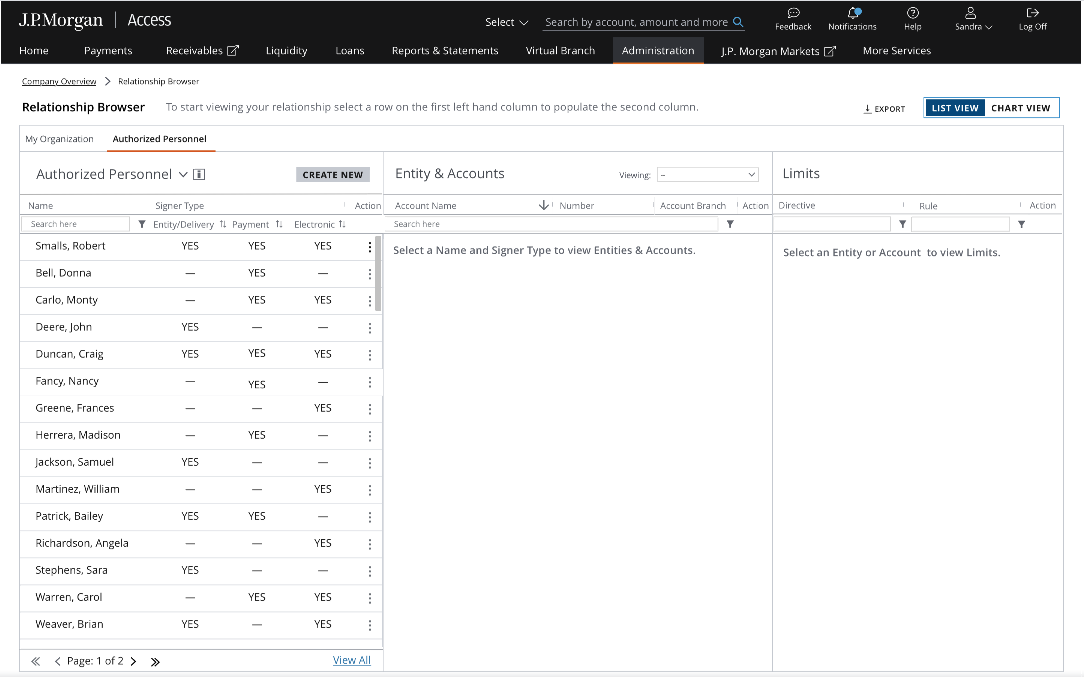
The resulting interface acted less like a simple screen and more like a control surface for a complex relationship model. I designed views that made signer records, account connections, limits, and available actions visible in one place, using established platform patterns where possible to support consistency and scale.
Usability testing with internal service teams across the US, EMEA, and Hong Kong helped refine the data presentation. That validation made it clear that clients and service workers needed a more complete view of signer designations than originally assumed, which directly shaped the final structure.
Impact
The final solution gave clients and service teams a far more complete view of signer designations, accounts, limits, and authorizations in a single environment. It reduced a slow, manual servicing process from weeks or months to minutes and contributed to an estimated $2 million in operational savings.
Just as importantly, the work demonstrated how service design, workflow mapping, and interface thinking could be used to solve a deeper systems problem inside a regulated enterprise environment.
Capabilities Demonstrated
- Authorization workflow design
- Data visibility and relationship modeling
- Cross-functional system alignment
- Global stakeholder validation across regions
- Operational efficiency and self-service enablement
- Governed design in a regulated environment